
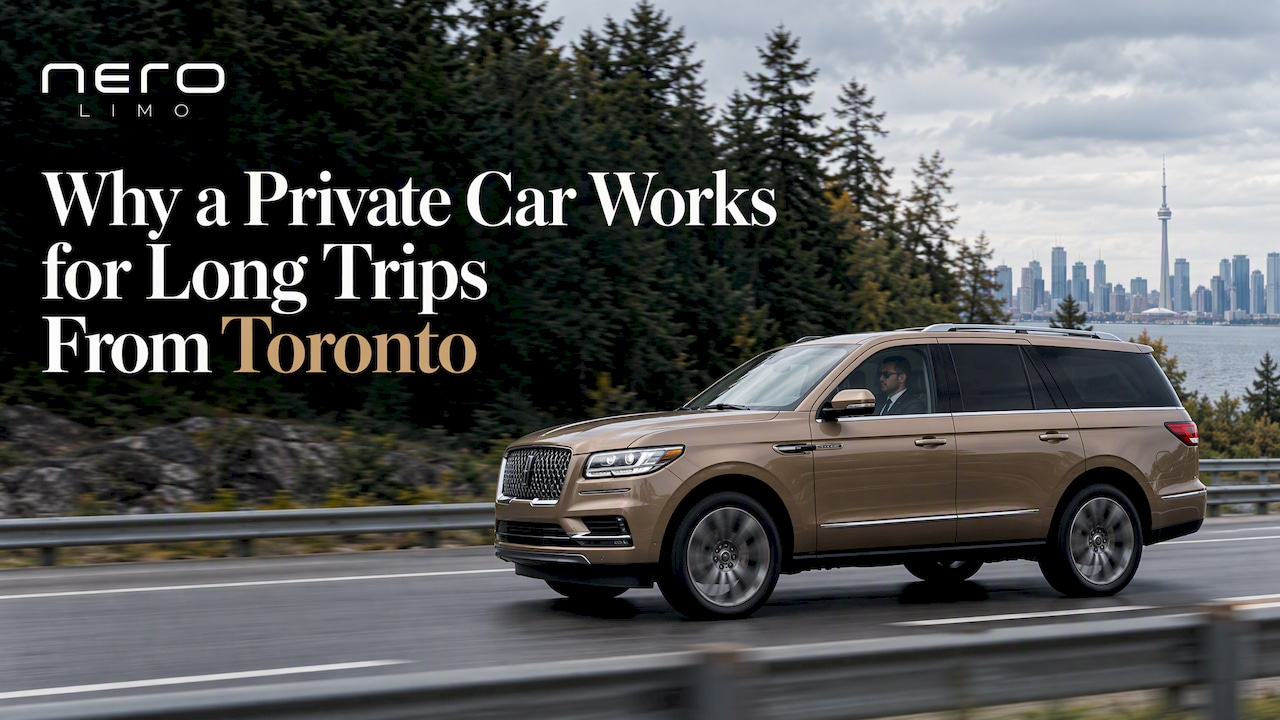
For most trips from Toronto to Niagara Falls, Ottawa, London, Kingston, Kitchener-Waterloo, Hamilton or Montréal, a private car with a professional chauffeur is the simplest way to travel. It takes you from your door to your destination in one vehicle. It leaves when you are ready and stops where you need it to. You can work, rest or talk the whole way instead of driving, parking or changing vehicles. Below we explain how it compares with the alternatives, who benefits most, and what to check before you book.
TL;DR
- A private car is one continuous door-to-door journey: no airport security lines, no train timetable, no parking, no transfers.
- You set the pickup time, the extra stops and the luggage load. The itinerary follows you, not the other way around.
- Business travellers get a private, quiet space to work. Families and seniors get comfort and help with bags and child seats.
- Ask any provider about commercial passenger insurance, chauffeur experience and the terms for waiting time, changes and cancellations before you pay.
- Our intercity service covers Toronto and Southern Ontario routes, including Montréal and cross-border trips.
Table of Contents
- What a private car for a long trip actually is
- Private car versus flying, renting, the train or driving yourself
- Door-to-door without the usual friction
- Comfortable and private for every kind of traveller
- Popular routes from Toronto and the GTA
- Flexibility: stops, luggage, pickup times and complex itineraries
- Why corporate travel benefits most
- Perspective: why we plan long trips the way we do
- What to check before you book
- Planning a long trip: a short checklist
- Book a long-distance private car with Nero Limo
- FAQ
- Sources
What a private car for a long trip actually is
A private car service for long trips is a pre-booked, chauffeur-driven vehicle that takes you between cities. You are the only passengers in the car. It is not a taxi you hail, and it is not a rideshare that may cancel or reroute. You agree the pickup address, the time, the destination and any stops in advance, and one professional driver handles the whole route.
That sounds simple, but it changes the trip in practical ways. Nobody else’s schedule shapes yours. The chauffeur knows where you are going and when you need to arrive. If your meeting runs late or your flight is delayed, the plan adjusts rather than collapsing.
It also differs from a rental. A rental car hands the driving to you, along with the fatigue, the navigation and the parking at the other end. A chauffeured car hands all of that to someone whose job it is.
Private car versus flying, renting, the train or driving yourself
The right choice depends on the route, the group and what you need to do on the way. Here is how the options compare on the points that matter most for a trip within Southern Ontario or to Montréal.
| Factor | Private car with chauffeur | Flying | Train | Rental or your own car |
|---|---|---|---|---|
| Door-to-door | Yes, one vehicle | No, needs transfers at both ends | No, station to station | Yes, but you drive |
| Schedule | Set by you | Set by airline, plus early arrival | Set by timetable | Set by you |
| Parking and navigation | Handled by the chauffeur | Airport parking or a ride to the airport | Station access needed | Your responsibility |
| Working or resting en route | Yes | Limited, in security and boarding time | Possible | Not while driving |
| Extra stops | Easily added | Not possible | Not possible | Possible |
| Luggage and equipment | Loaded for you | Baggage rules and fees | Carry-on style limits | Your own loading |
Flying
For the cities in this article, flying rarely saves time once you count the ride to the airport, the time before departure, baggage claim and the ride at the other end. Each of those steps is a place for a delay. A car skips them. For longer journeys, such as a connection through Pearson, we also handle airport pickups, which you can read about in our airport transportation guide.
The train
A train is comfortable on the right corridor, but it runs on a fixed timetable and goes station to station. You still need a way to reach the station and a way to get from the destination station to your meeting, hotel or home. If you are carrying luggage, samples or presentation material, or travelling with children or a parent who needs a steady arm, those two extra legs add up.
Renting a car
Rental terms are worth reading before you assume it is the cheaper route. One Canadian rental company’s published terms say that rates are based on a 24-hour rental day, may include mileage charges and can change with late returns. The same terms require a valid licence and a major credit card and may add fees for drivers under 25 or additional drivers. A chauffeured car removes those variables and leaves you free to use the time.
Driving yourself
Your own car is flexible, but the driving time is lost time. You manage the route, the traffic, the weather and the parking. On a four-hour trip you arrive tired, and if you drive back the same day, you do it twice. For an executive heading into a meeting, that is the wrong way to arrive.
Door-to-door without the usual friction
The biggest benefit is what you no longer deal with:
- Airport delays. No check-in queues, no security, no gate changes.
- Train schedules. You leave at the time that suits you, not the next available departure.
- Parking. The chauffeur drops you at the entrance. No parking search, no garage fees at your destination.
- Multiple transfers. Taxi to the station, train, taxi again becomes a single ride.
This matters most for people carrying more than a backpack. A family with strollers and suitcases, a sales team with demo equipment or a senior with a walker does best with one vehicle that loads once and unloads once.
Comfortable and private for every kind of traveller
Business executives
Your time in the back seat becomes working time. You can take calls, review documents and prepare for the meeting without worrying about who can hear you. We think of the car as a mobile office, and privacy is the reason it works. The chauffeur handles the road while you handle the agenda. Our guide to how chauffeur services help business travellers goes deeper.
Families
Long rides with children are easier when no one has to drive, navigate and referee at once. You can plan stops for snacks and washroom breaks around the children, not around a timetable. We can provide a child or booster seat for $20 CAD, as listed on our rates page. Child car seats sold in Canada must carry a National Safety Mark, and canadian jurisdictions have seat-belt and child-restraint laws covering all seating positions, so tell us your children’s ages and weights when you book and we will match the seat.
Seniors
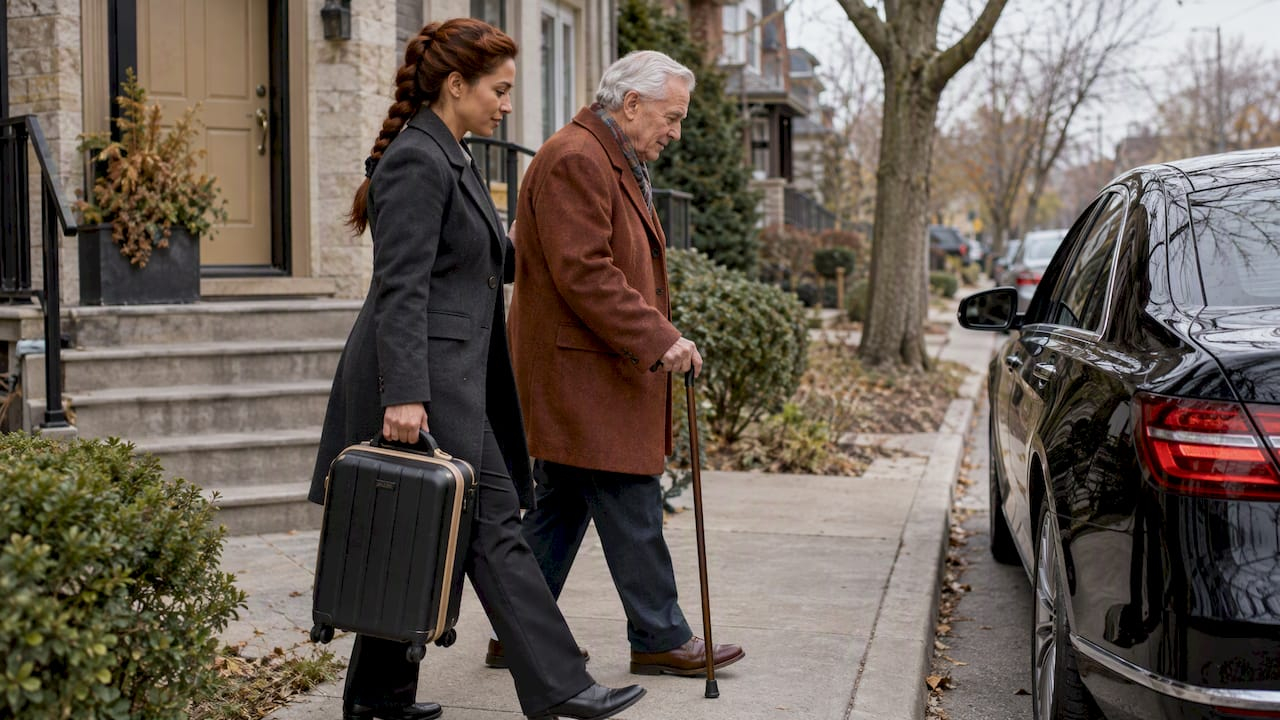
For older travellers, a long trip often fails at the transfers: the long walk through a station, the steps onto a train, the wait on a platform. A private car lets the chauffeur meet you at the door, handle the bags and drop you at the entrance. If you are booking for a parent, tell us about any mobility needs ahead of time so the vehicle and the plan fit.
Leisure travellers
A weekend in Niagara, a wine country day trip or a visit to family in Kingston is better when everyone in the group can relax. Nobody has to be the designated driver, and nobody leaves the table early.
Popular routes from Toronto and the GTA
The routes below are the ones we are most often asked about. Each works especially well by private car for the reasons given.
| Route | Why travellers choose a private car |
|---|---|
| Toronto to Niagara Falls | Day trips and weekend visits, with stops for wineries or attractions and no one needing to stay sober behind the wheel |
| Toronto to Ottawa | Government and business meetings, with productive time in the car and a drop at the exact address |
| Toronto to London | Corporate visits, university and hospital trips, with flexible same-day returns |
| Toronto to Kingston | Conferences, campus visits and family trips, with easy mid-route stops |
| Toronto to Kitchener-Waterloo | Tech and business visits, with an on-time arrival and a quiet working ride |
| Toronto to Hamilton | Short but awkward by transit, ideal for airport connections and event evenings |
| Toronto to Montréal | The longest of the group, where privacy, rest and a single vehicle matter most |
We also run trips that cross the border. If you need to go south, see our cross-border limo service. Our home page, Nero Limo in Toronto, explains the full range, and our black car and limo service across Ontario page covers the wider region.
Flexibility: stops, luggage, pickup times and complex itineraries
The most useful feature of a private car is that the trip bends around you.
Extra stops. Need to pick up a colleague, collect documents or stop for lunch? Tell us when you book. An additional stop is listed at $25 CAD on our rates page, so you know the cost in advance.
Luggage. Say how many bags you have, and any oversized items, and we will assign a vehicle to match. Advertised seating capacity is not the same as comfortable capacity once luggage is loaded. A vehicle-fit guide from Travelers Insurance notes that larger SUVs may seat six to eight people but can be less comfortable for bigger groups, while minivans generally offer more interior and cargo room. For larger parties, a Sprinter van can be a better fit than two cars, so ask us.
Custom pickup times. If you need to leave at 5:15 a.m. to reach an 8:30 meeting, the car is at your door at 5:15 a.m. No terminal check-in rules apply.
Complex itineraries. Multi-city trips, a roadshow with meetings in three cities, or a day with several drop-offs and pickups are what we plan. We coordinate the schedule, brief the chauffeur and stay in contact with you as plans change. If you want a car and driver at your disposal for the day, our hourly car service is built for that.
Why corporate travel benefits most
Long-distance business travel has three needs: privacy, productivity and reliability. A private car meets all three.
- Privacy. Confidential calls and documents stay confidential. There are no seatmates and no open carriage.
- Productivity. Two to four hours of a trip can become focused work time, with a workspace you do not have to share.
- Reliable scheduling. A single vehicle, a briefed chauffeur and a plan that adapts in real time reduce the number of things that can go wrong before an important meeting.
For travel managers and executive assistants, the benefits are administrative as well. One booking covers the whole journey, with one point of contact. For teams, one vehicle keeps colleagues together, which makes pre-meeting preparation possible. Delegations and executives arriving from abroad get a seamless handover from the airport. See what to expect from a professional chauffeur service for how we run it.
Perspective: why we plan long trips the way we do
We came to long-distance work from corporate travel, and that shapes how we handle it. A long trip is not a short trip made longer. It has more points where things drift: a delayed flight upstream, a meeting that moves, weather on the highway, a passenger who needs a longer break than expected.
So we treat the journey as something to manage, not only a vehicle to send. We confirm the itinerary with you before the day, monitor flights when your trip starts at an airport, brief the chauffeur on the stops and the people they are collecting, and stay reachable throughout. When the schedule changes, which it often does, we want the change to be a phone call, not a problem.
We also think a long trip should feel personal. Our approach combines the attention of a boutique company with the operational discipline to handle large groups and events. A single executive and a delegation of thirty are planned with the same care, just with more moving parts.
If you take one thing from this article, let it be this: the value of a private car is not the vehicle. It is that someone else owns the logistics, so you can own the purpose of the trip.
Shan
What to check before you book
Not every provider is the same, and on a long trip the difference shows up on the highway, not in the quote. These are the questions worth asking any company, including us.
Commercial insurance
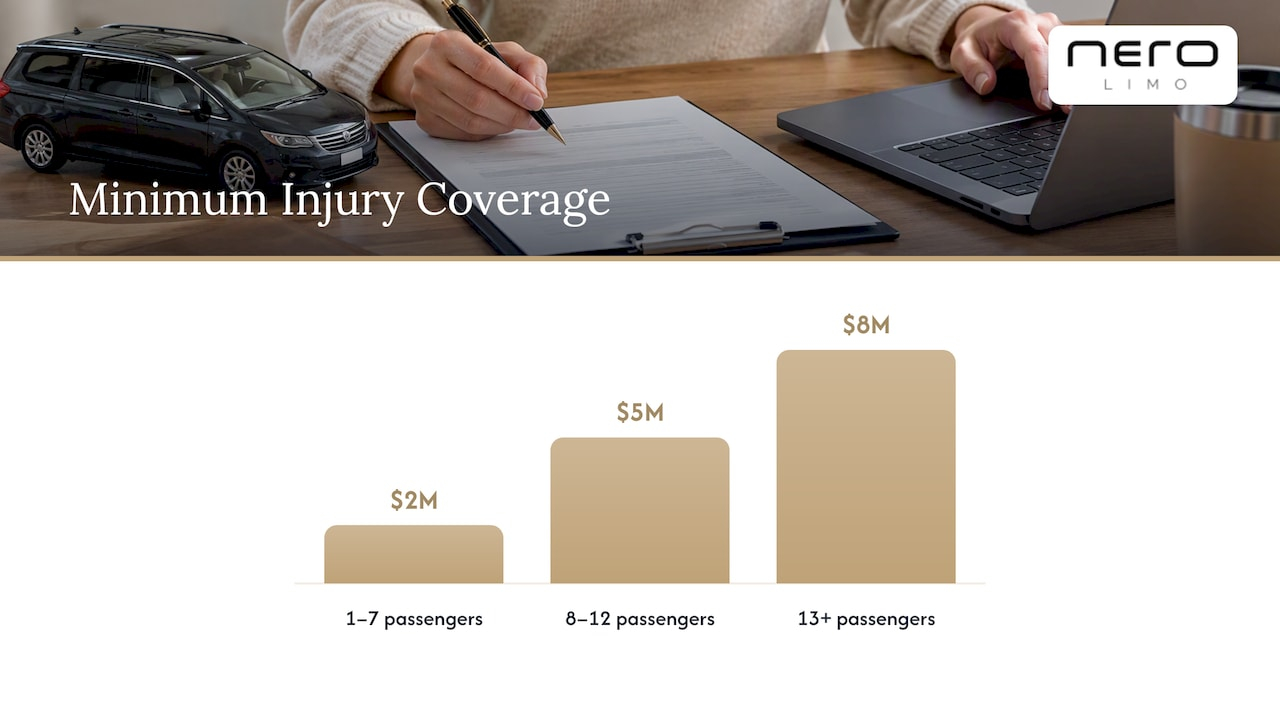
A vehicle carrying paying passengers should be insured as such. Ontario’s passenger transportation vehicles regulation (O. Reg. 418/21) sets minimum passenger bodily-injury insurance of $2 million for one to seven passengers, $5 million for eight to 12 and $8 million for 13 or more, plus $5,000 for passenger-property damage. Ask the company to confirm their coverage for your group size, and ask for proof. Ontario’s automobile insurance regulation also treats a limousine used to transport the public as a public vehicle, which is a different category from a private passenger car.
Licensed, experienced chauffeurs
The same regulation requires drivers to be at least 18 and fully licensed for the vehicle class. Legal minimums are a floor, not a standard. For a trip of several hours on Highway 401 or 400 series roads, ask how long the company has run long-distance routes, and whether the chauffeur you are assigned knows the route.
Vehicle condition and luggage safety
Ask about the age and condition of the vehicles. The Ontario regulation also requires interior luggage to be securely loaded so that it cannot interfere with passenger entry or exit or shift and contact a passenger or driver, and requires a working, accessible fire extinguisher. A professional operator should load your bags with that in mind and be able to tell you about the vehicle’s equipment. Our fleet is made up of late-model vehicles.
Winter readiness
Ontario winters affect long trips. A Canadian road-trip guide recommends four suitable winter tires for sustained cold and snow and advises checking weather and road closures before leaving. Ask any provider how they handle storm days: whether they monitor conditions, what happens to the schedule and how they communicate with you.
Terms and fees
Ask for the total price in writing before the trip. Check what is included and what is not: waiting time, extra stops, tolls, airport fees, gratuity, child seats and return trips. For example, our rates page lists a Pearson Airport fee of $17.25 CAD alongside the extra stop and child seat fees. Confirm the cancellation window and what happens if your plans change on the day. Our pricing guide explains what typically shapes the price of a chauffeured trip. Long-distance routes are quoted to the itinerary, so request a quote with your pickup address, destination, date, passenger count and luggage.
Planning a long trip: a short checklist
- Pick the route and time. Think about traffic leaving the GTA. Early mornings and midday departures tend to be easier than the Friday afternoon rush.
- Count passengers and bags honestly. Include coats, strollers and anything oversized. Real luggage fit matters more than published trunk volume, as the Canadian road-trip guide above notes.
- List your stops. Pickups, lunch, a meeting on the way, a washroom break for a child or a senior.
- Share special needs. Child seats, mobility help, pets or accessibility requirements.
- Confirm return plans. One way or round trip, and whether the chauffeur waits or returns later.
- Keep documents handy. For a crossing to the United States, every passenger needs valid travel documents. Check current requirements with the official border authorities before you go.
- Get it in writing. Pickup time, vehicle type, price and the contact number for the chauffeur or dispatcher.
Book a long-distance private car with Nero Limo
If you are travelling from Toronto or the GTA to another Ontario city, to Montréal, or across the border, we can plan the trip with you. We are a Toronto company serving clients throughout Ontario, across Canada and internationally through our partner network. See our intercity transportation page for how city-to-city trips work, browse our full list of services, or review the flat rates and fees we publish. Send us your route, date and passenger count, and we will come back with a plan.
FAQ
Is a private car better than the train for a trip from Toronto?
It depends on what you value. A private car goes from your door to your destination, leaves when you choose and allows stops, which a train cannot do. A train can suit a solo traveller with light luggage on a route that connects directly to both ends. For groups, families, seniors or anyone carrying equipment, one vehicle is usually simpler.
Can I add stops along the way?
Yes. Tell us about stops when you book so we can plan the timing. An extra stop is listed at $25 CAD on our rates page. For trips with several stops, an hourly or as-directed arrangement may suit you better, so ask us which fits your day.
What should I ask about insurance?
Ask the company for proof of commercial passenger insurance that covers your group size. In Ontario, the passenger transportation vehicles regulation sets minimum bodily-injury coverage of $2 million for one to seven passengers, with higher amounts for larger vehicles. A professional operator will answer this easily and in writing.
Can you take children on a long trip?
Yes. We can provide a child or booster seat for $20 CAD. Tell us the age and weight of each child when you book so we can match the right seat, and plan comfort stops into the schedule.
Do you travel to Montréal or across the border?
Yes. We serve Southern Ontario, Montréal and cross-border routes. Because long routes are planned to the itinerary, contact us with your dates, passengers and luggage for a tailored quote.
Sources
- Thrifty Canada terms and conditions (rental rates, mileage, licence and fee terms)
- Transport Canada, Motor Vehicle Safety Oversight Program
- Transport Canada, Road Safety in Canada
- Travelers Insurance, Choosing a Family Vehicle: SUV or Minivan?
- Ontario Regulation 418/21, Passenger Transportation Vehicles
- R.R.O. 1990, Reg. 664, Automobile Insurance
- Motorz.ca, Best Cars For Long Road Trips In Canada